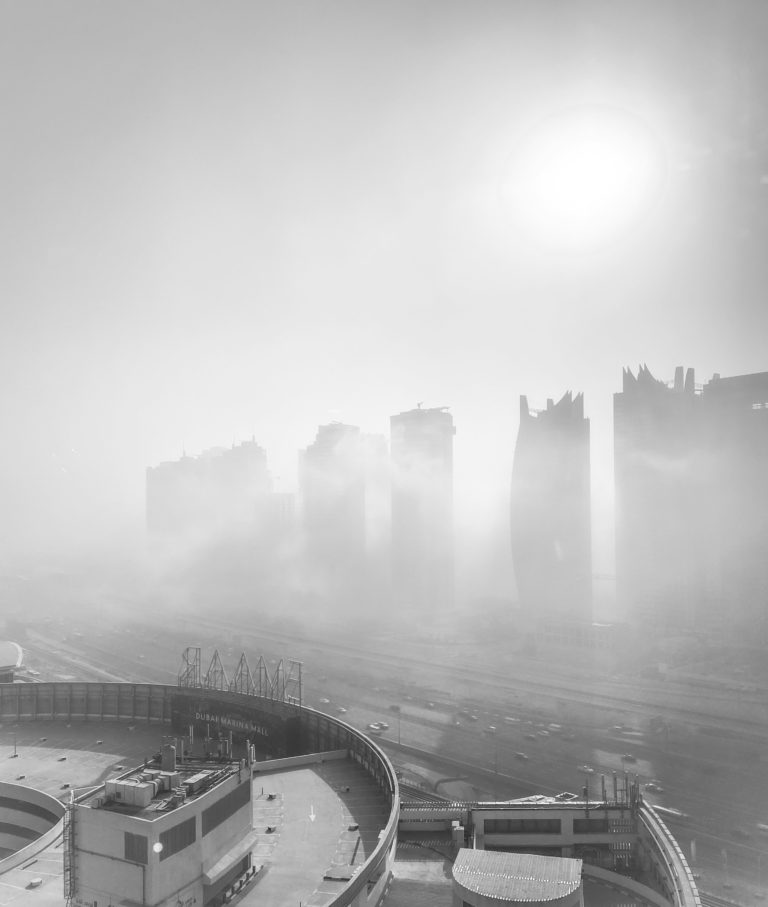
How to beat “Dubai throat” and indoor pollution: The complete UAE air quality guide (2026)
Quick summary
KEY TAKEAWAYS
- The “AC paradox”: Your air conditioning is essential for cooling but is often the primary source of mould and pathogens due to condensation in the ducts.
- Filter reality: Standard filter lifespan claims (12 months) do not apply in the UAE; heavy mineral dust reduces effective life to 4-6 months.
- Health impact: “Dubai throat” is a documented condition involving cough and congestion caused by dry AC air and recycled indoor pollutants.
- Scam alert: Avoid “AED 99” AC duct cleaning offers; legitimate deep cleaning for an apartment typically costs AED 950-1,500.
- Strategic buying: You need HEPA for dust, but you also need activated carbon for formaldehyde and a washable pre-filter for sand.
Time needed: 45 minutes to diagnose needs; 2-4 hours for deep cleaning service. Potential impact: Drastic reduction in respiratory issues, allergies, and “sick building syndrome” symptoms. Best for: UAE residents, specifically families and allergy sufferers in Dubai and Abu Dhabi.
1. Why you feel sick: The “indoor biosphere”
If you live in the UAE and suffer from a chronic dry cough, nasal congestion, or lethargy, you likely have what locals call “Dubai throat”. This isn’t just about the sand outside; it is about the “chemical soup” inside your home.
The UAE environment creates a unique “indoor biosphere” defined by two major challenges:
- Mineral dust: Unlike pollen in Europe, UAE air is heavy with silica and calcium carbonate from the desert.
- The moisture trap: When hot, humid outdoor air meets your cold AC-cooled walls and ducts, condensation forms. This wet environment turns cooling systems into breeding grounds for mould and bacteria.
This transforms air purification from a luxury into a health requirement.
2. The AC dilemma: Your home’s “lungs”
In a climate where windows stay closed, your AC system acts as the “lungs” of your home. Unfortunately, in many buildings, these lungs are compromised.
The hidden mould issue
Fiberglass insulation inside ductwork traps dust. When humidity spikes, this dust becomes damp, allowing mould colonies to root inside the insulation. This releases microbial volatile organic compounds (mVOCs), often detected as a “musty smell”.
WARNING: The duct cleaning scam
WARNING: COMMON MISTAKE TO AVOID
Do not fall for “bait and switch” cleaning offers.
Many companies offer an inspection or cleaning for as low as AED 99. Once inside, they use dubious testing methods to “find” mold and quote thousands for unnecessary remediation.
The reality of costs:
- Standard 2-bedroom apartment: AED 950-1,500.
- Villas: Can exceed AED 3,000.
What to look for: Legitimate services use rotary brush robots and negative pressure machines to extract dust, not just loosen it.
3. Comparing air purifiers: What actually works in the desert?
Not all air purifiers can handle the UAE load. Standard HEPA filters can clog in 2-3 months without proper pre-filtration due to coarse sand.
Market tier analysis (2025 data)
The market is split between premium “lifestyle” units and value-driven “smart” units.
Comparison: Top models in UAE
| Brand | Model | Best for | Approx. price (AED) | Filter cost / year |
| Dyson | Purifier Big+Quiet BP03 | Large villas / High budget | 3,300 – 3,800 | ~1,350 – 1,800 |
| Blueair | HealthProtect 7770i | Medical / Severe allergies | 2,800 – 3,200 | ~1,400 – 2,100 |
| Philips | Series 3000i (2-in-1) | Families (Humidify + Purify) | 1,800 – 2,200 | Varies |
| Levoit | Core 400S | Renters / Bedrooms | 800 – 1,000 | ~1,100 – 1,540 |
| Xiaomi | Smart Air Purifier 4 Pro | Tech-savvy / Budget | 700 – 900 | ~1,080 – 1,620 |
Export to Sheets
Data verified as of 2025. Filter costs estimated based on frequent changes required for high-dust environments.
Key features you need
- Pre-filter: Essential. A washable mesh that catches hair and coarse sand saves your expensive HEPA filter.
- Activated carbon: Required for “new home” smells (formaldehyde) and cleaning chemicals.
- HEPA: Captures the fine PM2.5 dust that enters even well-sealed skyscrapers.
4. Humidity control: The confusion
Residents often ask: Do I need a humidifier or a dehumidifier? The answer depends on the season.
When to use a dehumidifier (summer)
- Problem: Even with AC, humidity in walls and wardrobes can exceed 60%, causing mold on leather goods and clothes.
- Solution: Use a compressor-based dehumidifier (20L/day capacity) during July-September. Small “Peltier” units are ineffective here.
When to use a humidifier (winter/aggressive AC)
- Problem: “Dubai throat” is often caused by dry mucous membranes when indoor humidity drops below 30% due to over-cooling.
- Solution: Evaporative humidifiers (like Philips NanoCloud) are preferred over ultrasonic ones to avoid bacterial growth in water tanks.
5. Step-by-step: Your clean air protocol
Follow this routine to manage the UAE environment effectively.
Step 1: Measure first
Don’t guess. Buy a high-quality air monitor that measures PM2.5, CO2, and VOCs.
- High CO2 (>800 ppm): You need fresh air or better ventilation.
- High PM2.5: You need better filtration or cleaning.
Step 2: The “sandstorm protocol”
When weather data predicts a “Shamal” (sandstorm):
- Ramp your air purifier to “High” before the visible dust arrives.
- Ensure all windows and balcony doors are sealed.
Step 3: Filter maintenance
Ignore the “12-month” sticker on the box. In Dubai:
- Check filters: Every month.
- Replace filters: Every 4-6 months.
- Clean pre-filter: Wash or vacuum the outer mesh monthly to maintain airflow.
Frequently asked questions
Q: Can I just open the windows for fresh air? A: Generally, no. While “green buildings” are airtight, opening windows in older villas allows coarse sand intrusion. In high-rises, the “stack effect” can pull in fine particulates, so ventilation should be controlled or filtered.
Q: Why does my house smell musty? A: This is likely microbial volatile organic compounds (mVOCs) released by mold growing in your AC ducts or behind gypsum ceilings due to condensation. This requires inspection, not just air freshener.
Q: Is “Dubai throat” real? A: Yes. It is a colloquial term for sick building syndrome (SBS) symptoms—dry cough, congestion, and irritation—caused by the combination of dry AC air, recirculated pathogens, and dust.
Q: Do I really need a “formaldehyde” filter? A: If you have new furniture or fit-outs, yes. UAE interiors use engineered woods and synthetic carpets that off-gas formaldehyde, often exceeding WHO thresholds.
What to do next
Ready to clear the air?
Today
- Check your AC vents: Look for visible black spots or dust accumulation on the grills.
- Vacuum existing filters: If you have an air purifier, vacuum the outer layer immediately.
This week
- Order a monitor: Get a baseline reading of your indoor PM2.5 and humidity.
- Evaluate your machine: If you rent a small apartment, look at the Xiaomi Smart Air 4 or Levoit Core 400S. If you own a large villa, consider the Dyson or Blueair models for larger coverage.
Within 30 days
- Schedule professional cleaning: If you smell mould or see dust buildup, book a rotary-brush duct cleaning service (expect to pay AED 950+ for an apartment).